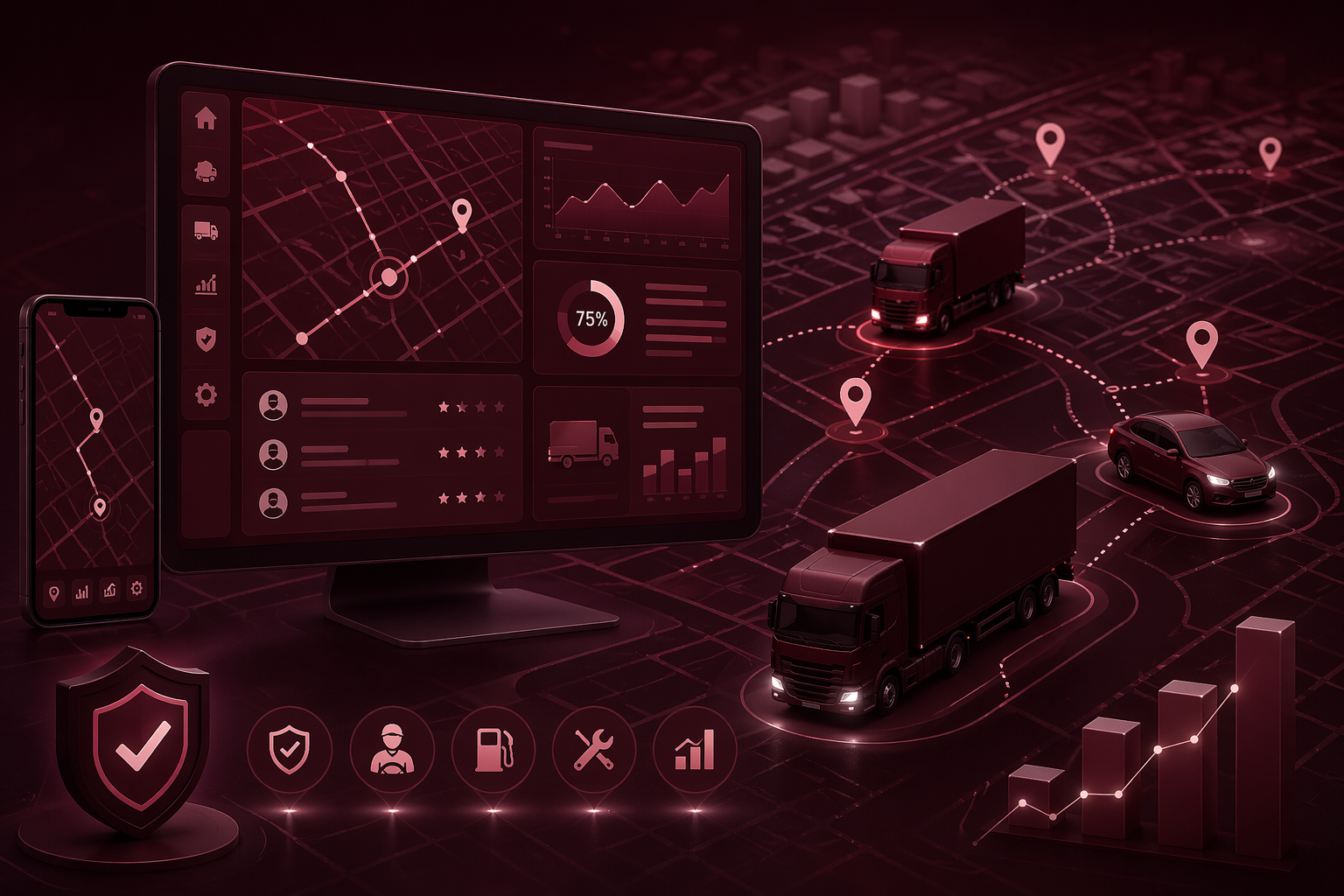
Today’s fleet management heavily relies on databases; traditional fleets have transitioned away from their typical operations to become more intelligent, data-driven systems, therefore creating new levels of operational efficiency through technology. Businesses that utilise advanced technologies for managing fleets have access to real-time data (visibility), improved operational efficiencies ( efficiencies), increased levels of safety (safety) and corresponding decreases in their overall cost of operation ( costs). This article provides a broad overview of several important technological components associated with managing fleets.
1.GPS and GNSS (Global Positioning System / Global Navigation Satellite System)
Fleet tracking technologies utilise GPS/GNSS as the principal form of determining the exact position of the fleet of vehicles to the best of their ability. By using Satellite Signals transmitted from Space-Based Positioning Systems like GPS, GLONASS and other GNSS, they can achieve the precise location of any vehicle to the best of their ability. Advances in modern technology and the introduction of multi-Constellation GNSS (GPS, GLONASS, Galileo, BeiDou) provide a Fleet Tracking System with greater accuracy of vehicle(s) location in an array of different environments, such as Urban Canyons and Remote Areas.
Oftentimes, with the improvements in accuracy, Fleet Management Systems increase their visibility based on;
- Tracking vehicles in real-time and monitoring routes
- Improving route optimisation and reducing travel time
- Improving fleet security through geofencing and theft detection
- Detailed trip history and accurate reporting.
- Ultimately, GPS/GNSS ensures complete visibility of fleet movement at all times.
2. AI and Machine Learning
FMS can greatly take advantage of the predictive and analytical capabilities provided by AI and ML. AI helps businesses predict problems before they actually happen. The areas where AI can be implemented in FMS include:
- Predictive maintenance by identifying where failures might take place
- Driver behaviour analysis that flags overspeeding, harsh braking, and other unsafe driving patterns.
- Route optimisation by providing the best possible routes considering traffic, weather and past experiences
- Fuel consumption analysis to give customers ways to reduce excess fuel use.
3. Cloud Computing
The use of cloud technology gives fleet management platforms the ability to store or process very large amounts of information securely and more efficiently. Through the use of the cloud, businesses can access their fleet’s information from anywhere at any time, back up their data securely, and also use this information seamlessly in conjunction with other enterprise systems, such as ERP or CRM systems. Cloud technology also provides managers with a real-time dashboard and reporting capability, which makes it much easier for managers to monitor activities and take immediate action.
4. Mobile Applications
Mobile apps are a big deal for staying in touch between fleet managers and drivers.
- These applications provide:
- Real-time updates and notifications
- Navigation assistance and route guidance
- Digital documentation and e-logs
- Driver performance feedback
5. Telematics Systems
Focusing on a new technology called Telematics, which combines computer networks with vehicles through wireless communications. Today’s telematics systems provide various data, including but not limited to:
- Engine diagnostics data via the CAN bus, idle time, and fuel consumption.
- Vehicle health and fault codes
- Driving patterns and safety metrics
6. Video Telematics
Video telematics brings cameras and AI together to give you a real, visual read on how your fleet’s actually running. These systems offer:
- Real-time video monitoring inside and outside the vehicle
- Driver behaviour analysis using AI (fatigue detection, distraction alerts)
- Evidence in case of accidents or disputes
- Improved safety and accountability
7. Data and Analytics
Fleet management systems generate lots of data every day. The raw data turn into real data and actionable insights through data analytics.
- Operational efficiency trends
- Driver performance metrics
8. Integration with Smart Infrastructure
Modern fleet systems can integrate with smart city infrastructure, including:
- Traffic management systems
This integration helps reduce delays, optimise routes, and improve overall efficiency.
9. Electric Vehicle (EV)
As more fleets go electric, technology is suddenly updated, full of EV-specific management features, things like:
- Battery health monitoring
- Charging station tracking
- Energy consumption analysis
- Route planning based on battery range