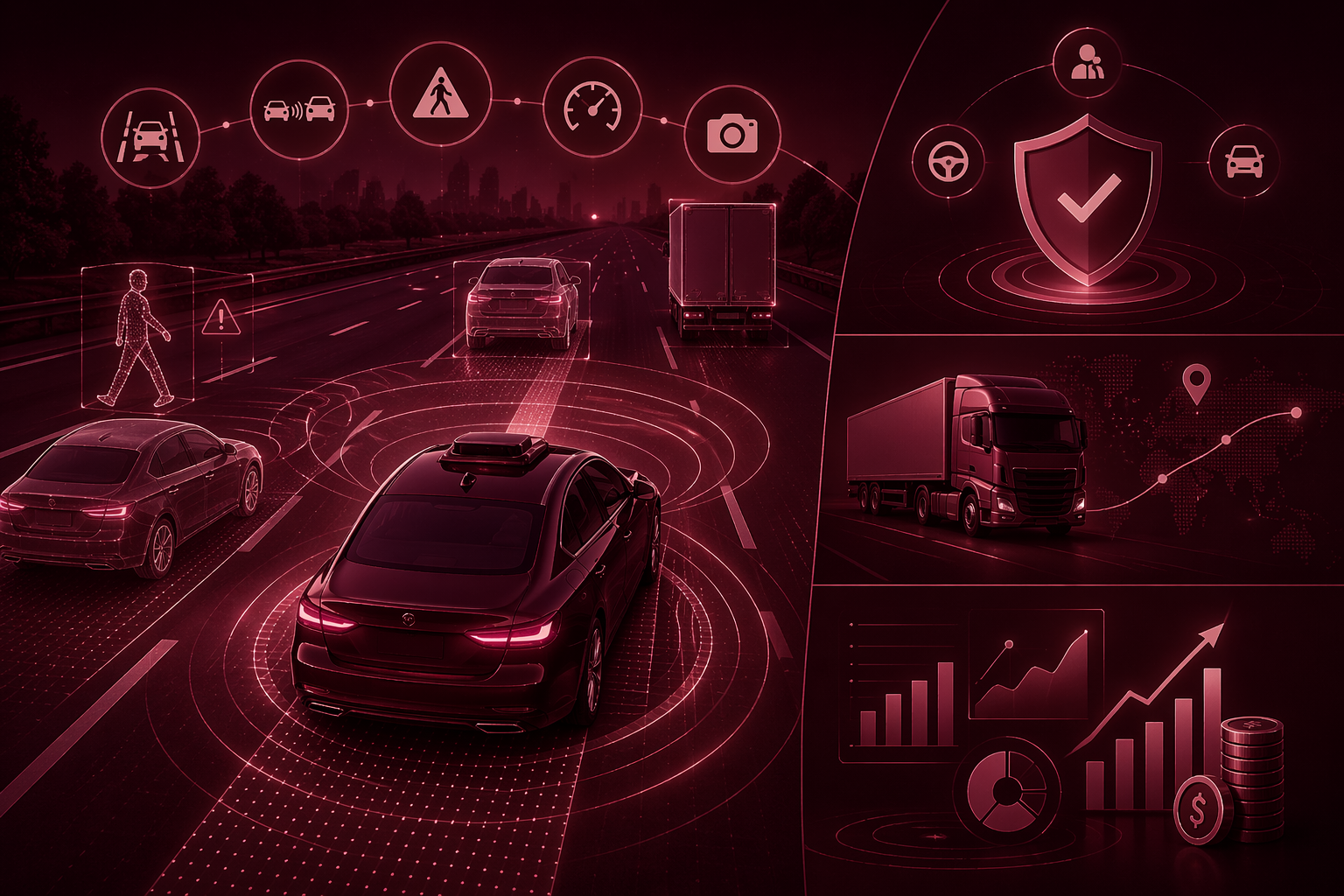
1. Significant Reduction in Road Accidents
ADAS is designed primarily to prevent collisions. By utilizing features like AEB and FCW, drivers are notified when they are distracted, thereby preventing the accident rate. Based on statistical data, ADAS systems can reduce rear end collisions by as much as 50%. Therefore, these technologies have been found to be very effective in preventing collisions in both congested metropolitan stop-and-go traffic conditions as well as on fast-paced highways.
2. Enhanced Driver Safety & Real-Time Alerts
ADAS also reduces the chances of accidents occurring as a result of human error by utilizing technology like Blind Spot Detection and Lane Assist. ADAS effectively acts like a second driver that never blinks while providing real-time audio and/or haptic feedback to the driver to help them maintain awareness of their immediate surroundings at all times.
3. Improved Driver Behavior & Reduced Fatigue
Long hauls can be physically exhausting for drivers. The Driver Monitoring System helps managers to monitor and evaluate their drivers. Through this, they receive insights on ways to improve their driving style as well as factors like if the driver is in need of rest. This is important when it comes to commercial fleets, as driver alertness is vital for maintaining the safety of both the driver and the cargo they carry.
4. Better Visibility & Driving in Poor Conditions
Features like rain sensors and night vision increase safety in rural locations or during heavy rain. Due to the inconsistency of road lighting in India and the variability of the weather in certain parts of the country, these types of systems give the driver the additional eyes required to successfully navigate through low-light conditions.
5. Lower Insurance Costs & Risk Exposure
From a financial perspective, ADAS reduces the frequency of insurance claims. By lowering the vehicle's overall risk profile, fleet owners can often negotiate better premiums. In a Fleet SaaS environment, ADAS data contributes to a higher Risk Score, proving to insurers that the fleet is a safe bet.
6. Increased Fleet Efficiency & Operational Productivity
While many focus on safety, Advanced Driver Assistance Systems (ADAS) directly influence the financial bottom line by significantly reducing accidents and therefore, non-operational time associated with maintenance costs. Properly configuring ADAS with route optimization produces improved key performance indicators (KPIs) like Cost per KM and enhances the overall Driver Performance Score.
7. Real-Time Decision Making with AI & Telematics
ADAS achieves its full functionality when it is integrated with Internet of Things (IoT) and Global Positioning System (GPS) telematics. Using this data layer, predictive safety models can be created that will utilize Vehicle-to-Vehicle (V2V) or Vehicle-to-Infrastructure (V2I) communication, resulting in the ability to proactively predict safety risks long before they can be identified through human observation.
8. Enhanced Parking & Maneuvering
Using automated parking systems and 360-degree cameras can eliminate the headache of parking in tight spaces and reduce the number of small damages that happen during low-speed maneuvering and the associated costs to maintain these vehicles.
9. Compliance & Future-Ready Driving
As the new Bharat NCAP comes into effect and global safety trends evolve, the addition of Advanced Driver Assistance Systems (ADAS) is becoming less of a luxury extra and more of an essential industry standard. Making an investment in vehicles equipped with ADAS will ensure that both your private passenger vehicle or commercial fleet vehicle is compliant with upcoming regulatory standards regarding safety and will help preserve their value when they are resold later.